About EXPAND
The Expert Panel on Nuclear Disarmament Verification (EXPAND) is a non-governmental panel tasked with elaborating on the technological bases and relevant mechanisms of nuclear disarmament verification (NDV). Its goal is to complement ongoing processes within the United Nations (UN) framework, particularly the work of a future Group of Scientific and Technological Experts (GSTE), which is expected to begin its mandate in 2027 following the recent UN General Assembly resolution.
Objectives
Funded by the German Federal Foreign Office, EXPAND brings together leading international experts to establish a systematic and comprehensive overview of existing and emerging technologies and mechanisms relevant to NDV - i.e., those that are likely to be included in future nuclear disarmament verification and arms-control regimes -and, on this basis, identify gaps that would need to be filled.
This synoptic overview is intended to provide a scientific and factual basis for deliberations in intergovernmental fora, and to enable integration of relevant NDV research institutions that are not yet involved in these processes.
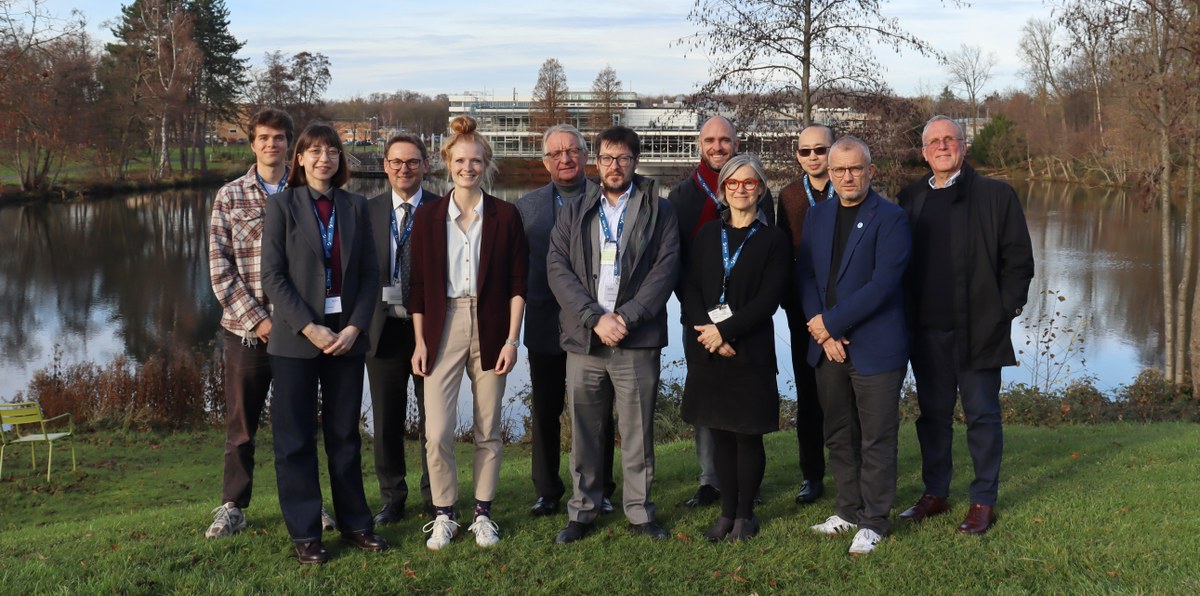
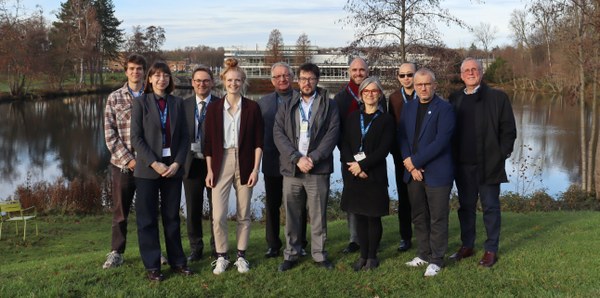
Participants at the first in-person meeting of the EXPAND core group held in December 2025 at Forschungszentrum Jülich, Germany.
General Framework and Context
Why is verification relevant now?
Verification is essential to every future nuclear disarmament treaty. It provides confidence that states are meeting their obligations, using measures and procedures negotiated under the specific treaty framework.
While the political conditions for such a treaty may not yet be in place, it is crucial to develop mature concepts, technologies and mechanisms in advance. This ensures that, when the moment of political willingness to conclude a treaty arrives, states will have these tools readily available to draw on as they negotiate and design their verification regime.
Non-nuclear weapon states play a significant role in this groundwork. Not only do all states have a stake in achieving nuclear disarmament, but they can also contribute their experience from regional nuclear agreements and relevant technologies, while further building the expertise to take part in future multilateral verification.
EXPAND takes up its work at a time of growing momentum for NDV
Although NDV has long been discussed, efforts to advance it have significantly accelerated in recent years. This includes substantial work by several initiatives such as the International Partnership for Nuclear Disarmament Verification (IPNDV), the Quad Initiative, VERTIC’s regional hubs, and others.
Efforts to advance NDV concepts, as well as to strengthen their multilateral consideration, were further strengthened through the work of two consecutive UN Groups of Governmental Experts on Nuclear Disarmament Verification (UN-GGE-NDV), which met from 2018-2023. The key outcomes of the report of the second UN-GGE to further consider nuclear disarmament verification issues (A/78/120) highlighted the utility of continuing work on NDV. In particular the report emphasized preparing a comprehensive compilation of verification methods, procedures and techniques - including those applied in existing arms limitation and disarmament agreements - and further advancing the concept of a Group of Scientific and Technical Experts (GSTE).
The idea of establishing a GSTE gained traction in subsequent years, with Norwegian and Brazilian efforts playing a particularly prominent role. In December 2024, the UN General Assembly adopted resolution 79/240 requesting the UN Secretary-General to elicit the views of Member States on the establishment of a GSTE-NDV within the UN system, and to consider the views of relevant intergovernmental organizations. Based on the Secretary General’s report published in July 2025 (A/80/93), Norway and Brazil tabled a draft resolution (A/C.1/80/L.59) at the UN General Assembly First Committee to formally establish a GSTE. The resolution was adopted by an overwhelming majority in November 2025. The group is expected to begin its work in 2027.
In light of these developments, EXPAND takes up its work at a critical moment. By elaborating on existing and emerging NDV technologies and mechanisms, and identifying gaps and future research needs, the Panel seeks to advance ideas proposed by the UN GGE-NDV and to provide a complementary, scientifically grounded contribution that supports the GSTE in building on this groundwork efficiently within its available time and resources.
Objectives
EXPAND aims to deliver:
- A comprehensive overview of existing NDV technologies and mechanisms, and those under development, drawing on previous work by members of the core group as well as IPNDV, the Consortium for Monitoring, Technology and Verification (MTV) and other initiatives.
- An assessment of verification challenges relevant to future nuclear disarmament and arms control regimes (technologies and mechanisms).
- An identification of critical gaps based on the first two deliverables.
- Recommendations for future research and development strategies to address these gaps.
At the same time, EXPAND contributes to strengthening global NDV capacity by:
- Establishing a roster of non-governmental NDV experts, and
- Engaging and mentoring the next generation of NDV scientists.
The Panel’s work will be demand-driven and scenario-based. While EXPAND will generally examine NDV technologies and mechanisms at a conceptual and generic level - so as to allow for an open exchange of views and not to prejudge future negotiations - it will also consider the most plausible scenarios for future nuclear arms control and disarmament negotiations. This scenario-driven approach is expected to enhance the practical relevance of EXPAND’s contributions for future negotiations and the work of the GSTE.
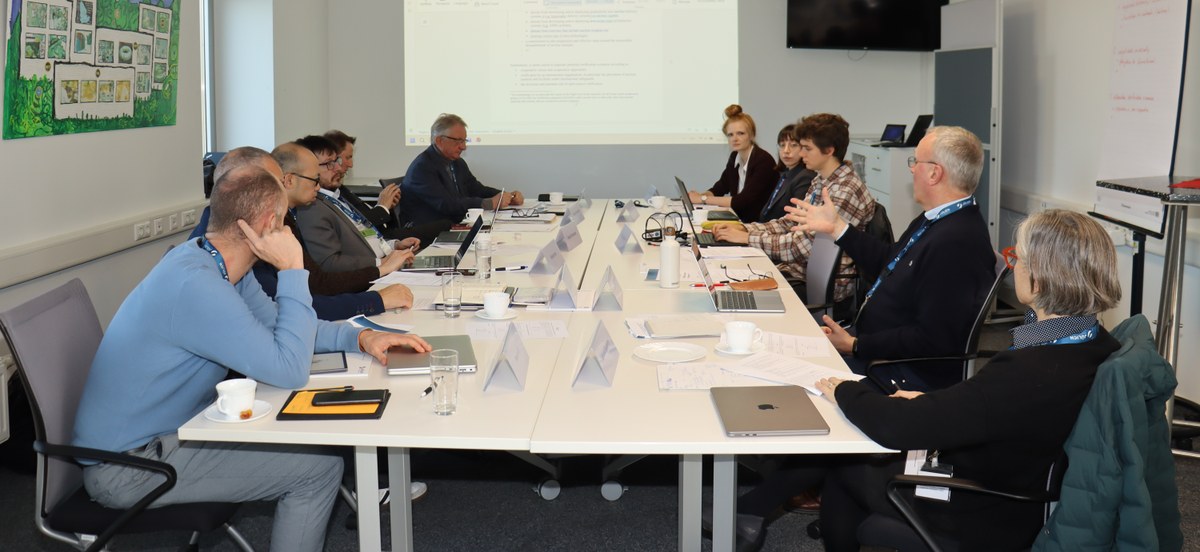
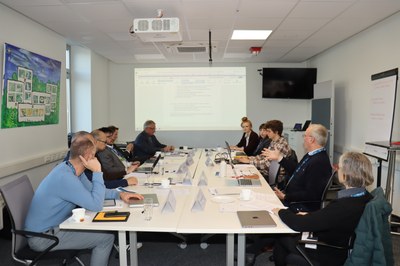
Members of the EXPAND core group during a discussion at the December 2025 meeting.
Structure and Institutional Aspects
EXPAND’s core group convenes for biannual plenary meetings in Geneva and Jülich from September 2025 through the end of 2027. During its first in-person meeting in December 2025, the group has defined its work program and determined the formation of thematic work streams. These work streams are informal, open-ended, and interdisciplinary, with representation from all regions of the world, combining scientific and technical expertise and ensuring an appropriate balance of regional and gender perspectives.
The German research institution Forschungszentrum Jülich serves as the executive secretariat, providing technical and logistical support. You can contact the secretariat at the following email address: expand@fz-juelich.de
Members of the Core Group
The Core Group brings together international experts from various institutions, who participate in their personal capacity.
Michael Biontino – former Permanent Representative to the Conference on Disarmament
Grant Christopher – the Verification Research, Training and Information Centre (VERTIC)
Alexander Glaser – Princeton University
Benjamin Hautecouverture – Fondation pour Recherche Stratégique
Moritz Kütt – University of Hamburg
Pavel Podvig – United Nations Institute for Disarmament Research (UNIDIR)
Sharon Squassoni - Elliott School of International Affairs
Wilfred Wan – Stockholm International Peace Research Institute (SIPRI)
Kim Westerich-Fellner – Forschungszentrum Jülich
Neslihan Yanikömer – Forschungszentrum Jülich
Tong Zhao – Carnegie Endowment for International Peace
A key added value of EXPAND is its scenario-based approach, examining plausible future disarmament frameworks across NDV domains with a strong focus on practicality and feasibility.
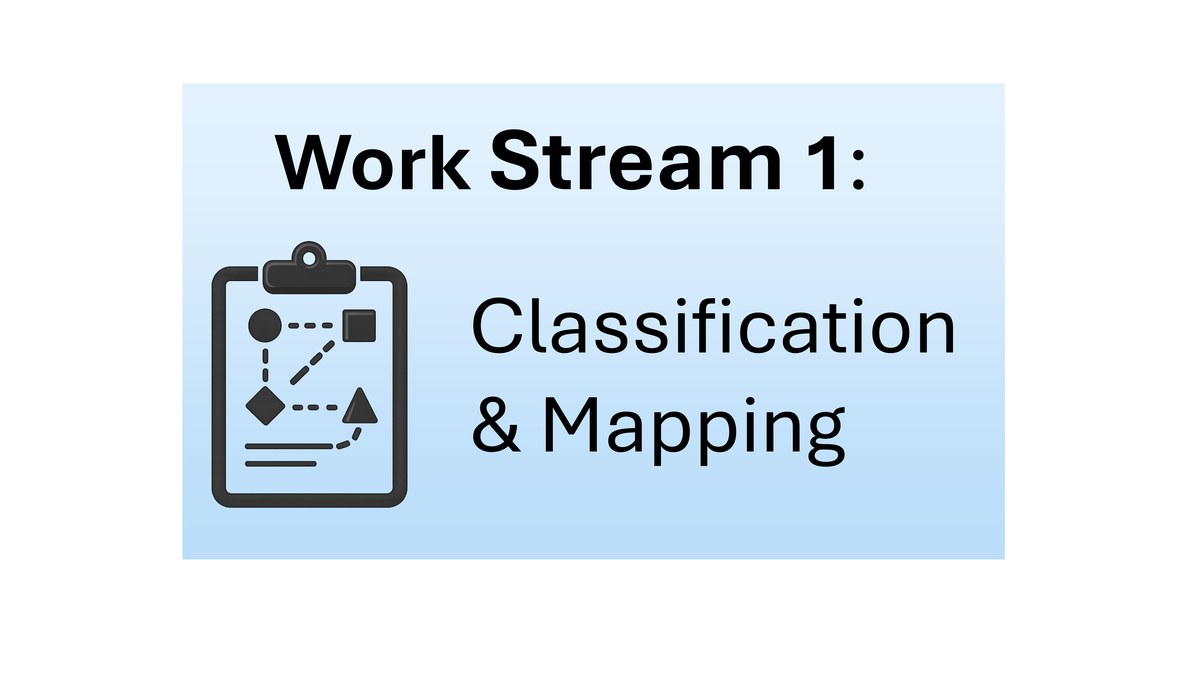
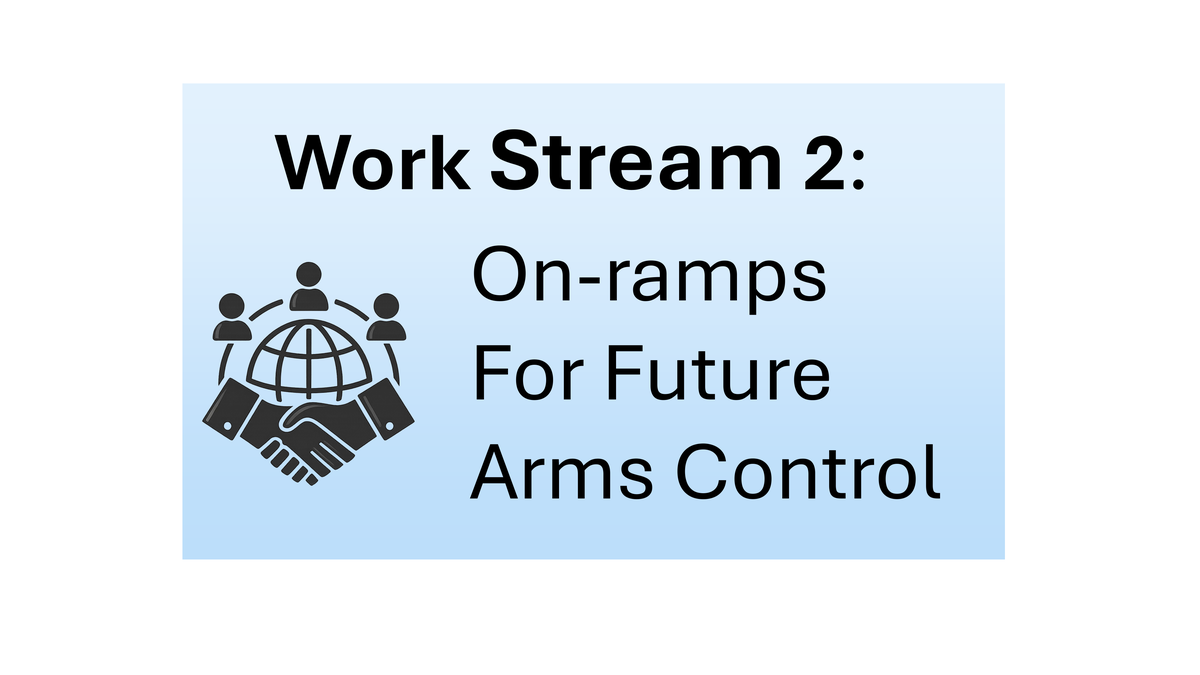
The panel is organized into several thematic work streams addressing specific scenarios.
Resources
This section provides access to reports published in the EXPAND framework.
Gaining more insight into EXPAND: This conference paper, prepared for the 2026 AMC Conference in Uppsala, provides an overview of the EXPAND expert panel, including its objectives, scope of work, and key work streams.
News
EXPAND Holds Side Event at the NPT Review Conference in New York
On 12 May 2026, on the margins of the NPT Review Conference in New York, EXPAND convened diplomats, researchers, and practitioners for an interactive side event at the German House.
The event offered an insight into the work and objectives of the expert panel, introducing participants to its research agenda on nuclear arms control and disarmament verification, while creating space to exchange perspectives and explore opportunities for future collaboration.
The discussion opened with remarks by Thomas Göbel, Ambassador and Permanent Representative of Germany to the Conference on Disarmament, and concluded with reflections from Tor Henrik Andersen, Special Envoy for Nuclear Disarmament Affairs at the Norwegian Ministry of Foreign Affairs.
In an interactive format, EXPAND experts presented key research scenarios from across the panel’s thematic work streams and exchanged perspectives with state delegates, technical experts, and practitioners working across nuclear security, arms control, and disarmament verification.
EXPAND extends its gratitude to the German Federal Foreign Office and the German House for sponsoring and hosting the event.
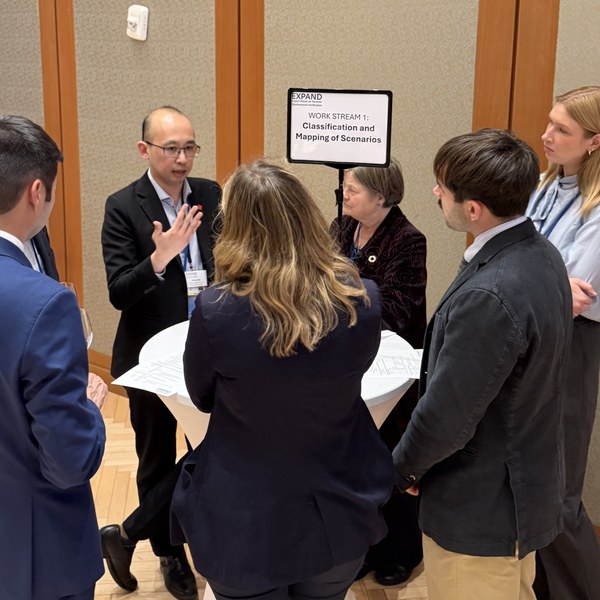
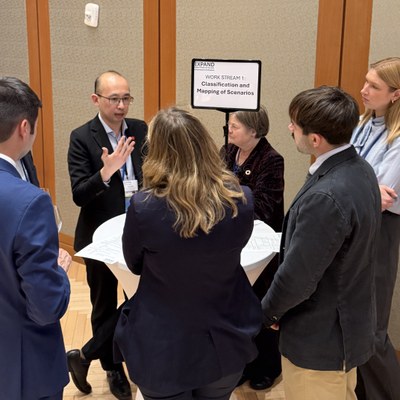
Image: EXPAND expert Wilfred Wan presenting one of the panel’s thematic work streams at the side event
EXPAND Core Group Members Convene for an In-Person Meeting in New York
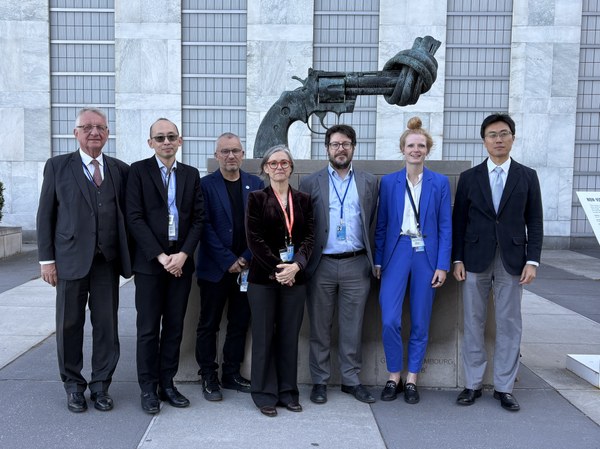
Image: EXPAND core group members convene on the margin of the NPT Review Conference in New York
On 12-13 May, members of the expert panel convened in New York on the margins of the 2026 NPT Review Conference to discuss the progress of EXPAND’s work and future priorities.
During the meeting, core group members reflected on recent developments in the nuclear disarmament verification field and discussed plans to advance EXPAND’s thematic objectives and capacity-building efforts. Among the initiatives considered were a series of numbered policy memos to be published by EXPAND’s work streams, the development of an online workshop series for next-generation nuclear researchers, and a potential directory of non-governmental NDV institutions to be made available through the EXPAND website.
The panel also met with a senior representative to exchange views on key priorities and explore how EXPAND could support ongoing nuclear disarmament verification efforts at the United Nations.
The meeting was hosted by the German House in New York and coincided with an EXPAND Side Event held at the venue on occasion of the NPT Review Conference.
EXPAND Convenes Its First In-Person Meeting in Jülich
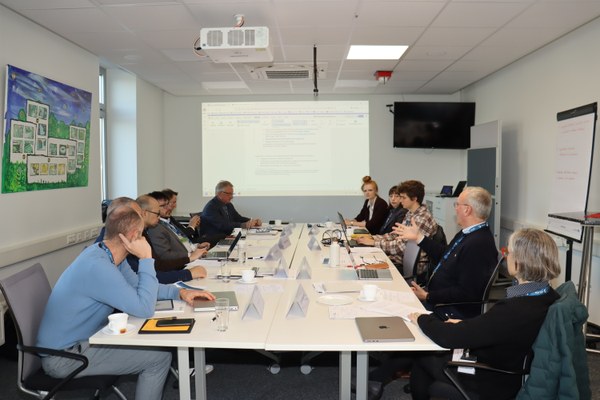
Image: EXPAND core group members convene at Forschungszentrum Jülich, Germany
On 8-10 December 2025, members of EXPAND’s core group convened at Forschungszentrum Jülich, Germany, for the panel’s first in-person meeting.
During the meeting, panel members discussed how EXPAND could support ongoing multilateral and intergovernmental nuclear disarmament verification (NDV) efforts while complementing existing initiatives. In line with its core objectives, the panel established EXPAND’s work program and further developed concepts for its envisioned scenario-based approach. This included identifying thematic work streams to address selected future arms control and disarmament scenarios across different areas of NDV. Members also explored possible options to advance EXPAND’s capacity-building efforts and strengthen engagement with the next generation of scientists.
In addition to the meeting, EXPAND experts had the opportunity to visit the renowned supercomputing facilities on the Forschungszentrum Jülich campus.
The meeting was hosted by Forschungszentrum Jülich, and EXPAND would like to extent its gratitude to the FZJ Events and Marketing Team for their valuable support with the organization and logistics.
Member Portal
This secure portal is reserved for members of the expert panel.
Supporting Partners
Couldn’t find an answer to your question on this website? Any organizational questions?
Contact the EXPAND executive secretariat: expand@fz-juelich.de
EXPAND